

How a week journey through Phnom Penh and Hanoi is bringing tactile learning to classrooms across Southeast Asia
Every year, millions of blind and low-vision students across Southeast Asia sit in classrooms where the most important part of the lesson; the graph, the map, the diagram, simply isn't accessible to them. Textbooks are built around sight. Whiteboards are built around sight. Even when braille materials exist, they're often limited to text, produced slowly, and in short supply, leaving the visual heart of math, science, and geography permanently out of reach.
This July, our team spent one week in Phnom Penh and Hanoi working to close that gap, one classroom at a time. Here's what that looked like on the ground.
 Cambodia: Deepening a Partnership Built Over Two Years
Dot Pad has been part of Cambodian classrooms for a while now. An earlier KOICA-supported rollout placed 40 units across the National Institute of Special Education (NISE) and four special schools, Tumnub School in Phnom Penh, and one school each in Siem Reap, Battambang, and Kampong Cham. This trip was about going deeper into that nationwide partnership rather than starting a new one.
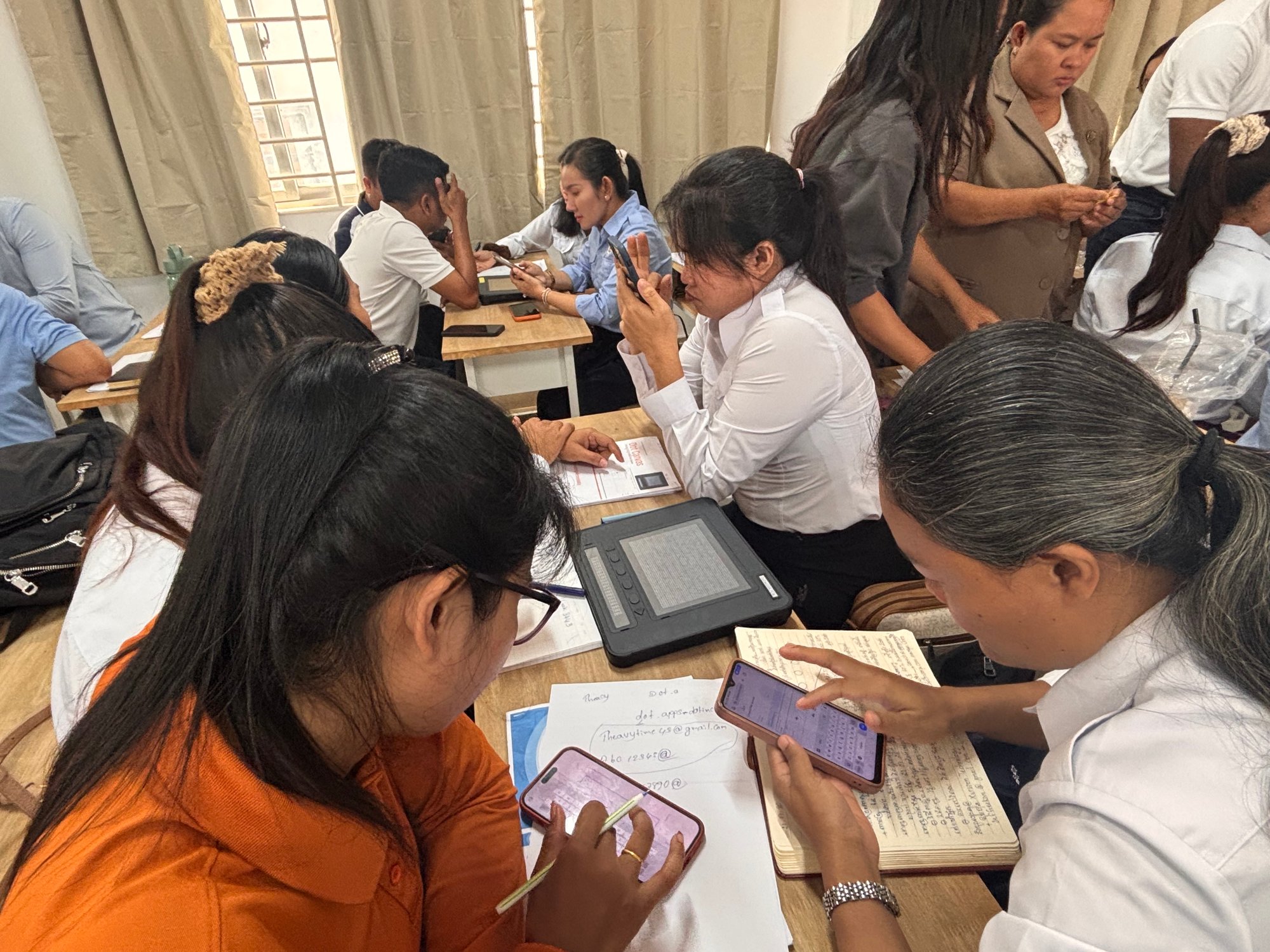
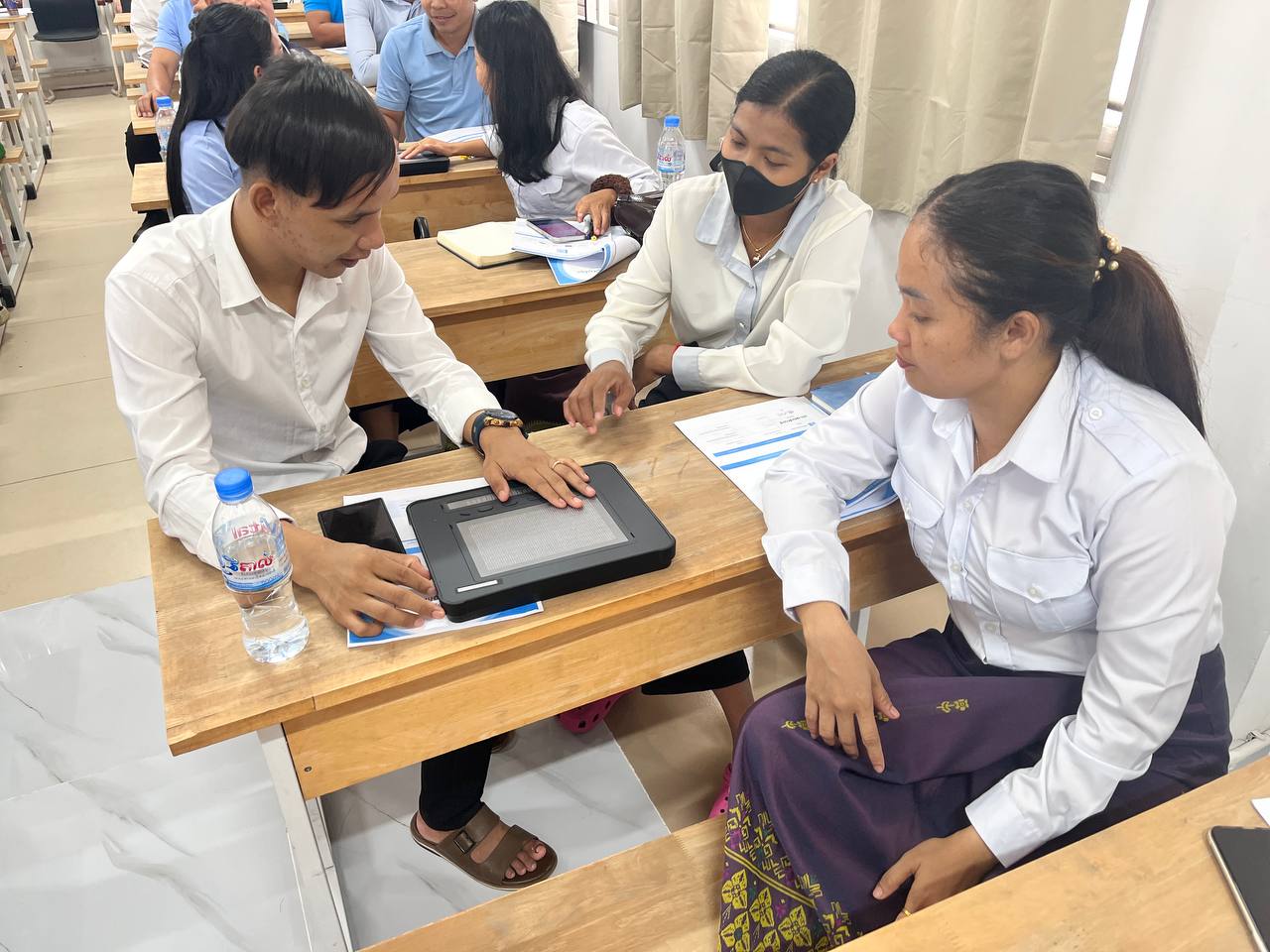
Over two full days, our Customer Success Director co-led a hands-on training with Kim Jeong-ho of X-Vision Technology, a longtime collaborator on the Dot Pad's development, and one of the most compelling advocates for accessible technology we've had the privilege to work alongside. Together, they trained close to 50 teachers and braille transcribers: a morning built around assistive technology fundamentals, and an afternoon of hands-on practice with the Dot Pad and the Dot Canvas app.
The numbers backed up what we saw in the room. Post-training surveys scored the sessions 4.23 out of 5 for the Dot Pad and assistive technology training, and 4.25 out of 5 for the Dot Canvas training with real-world classroom applicability rating highest of all, at 4.54 and 4.40. Teachers pointed to one thing again: finally being able to let students directly touch and explore graphics, math, and science material for themselves. And they asked for more deeper training on device maintenance, screen reader integration, and teaching strategies for visually impaired students, all of which are shaping our next session.
We also spent time in an actual classroom with a math and science teacher who has folded the Dot Pad into his weekly teaching, using it several days a week to bring shapes, graphs, and equations to life for his students in ways that simply weren't possible with embossed paper alone.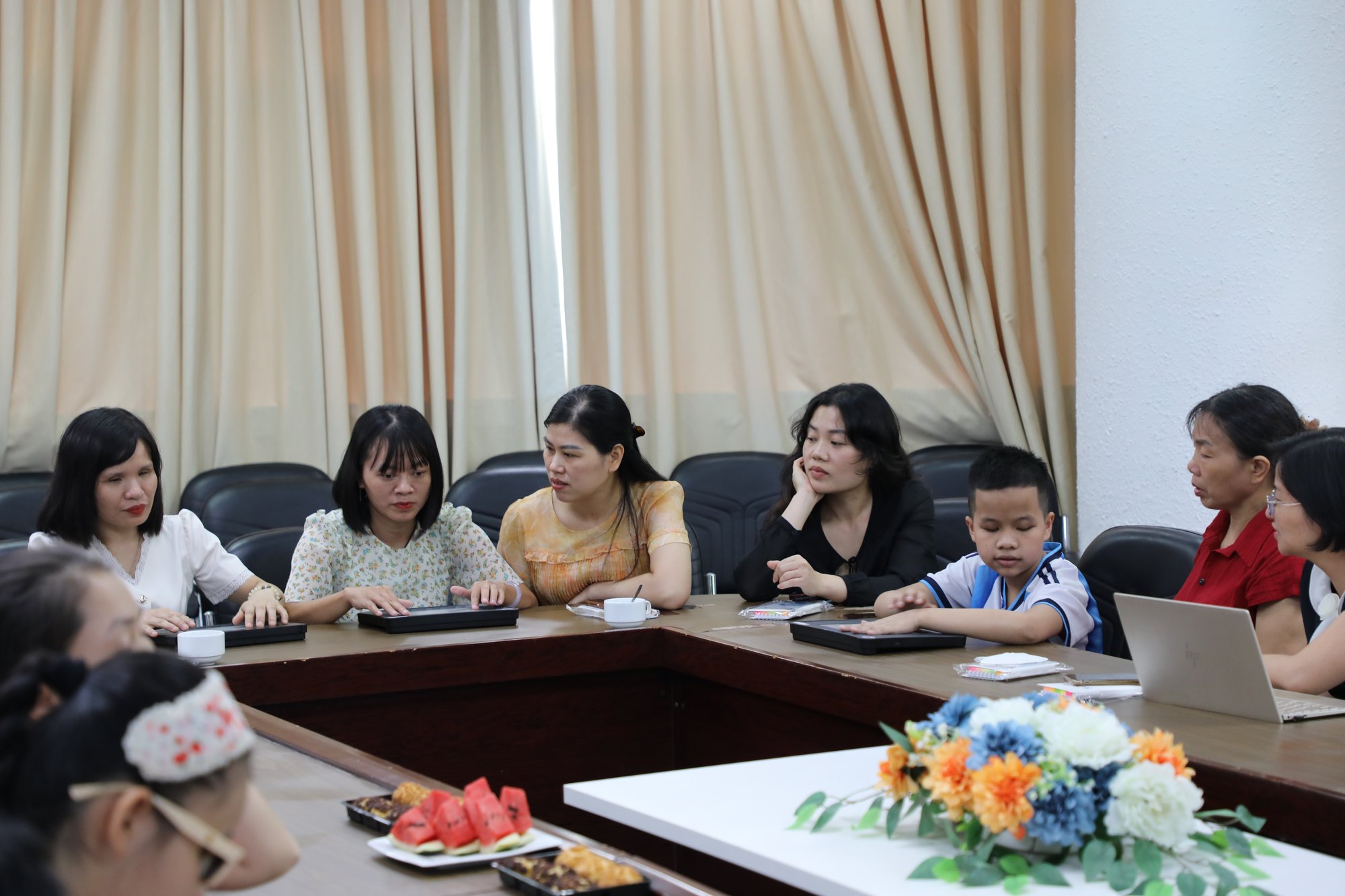
One of the most valuable parts of the trip was a sit-down with NISE's own braille transcription team, seven local transcribers, and two KOICA volunteers who work with this technology every day. Hearing directly from the people closest to the classroom experience is shaping what comes next for Dot in Cambodia, including a deeper investment in Khmer-language support so that every part of the experience, not just the hardware, feels genuinely local.
Vietnam: A New Chapter Begins in Hanoi
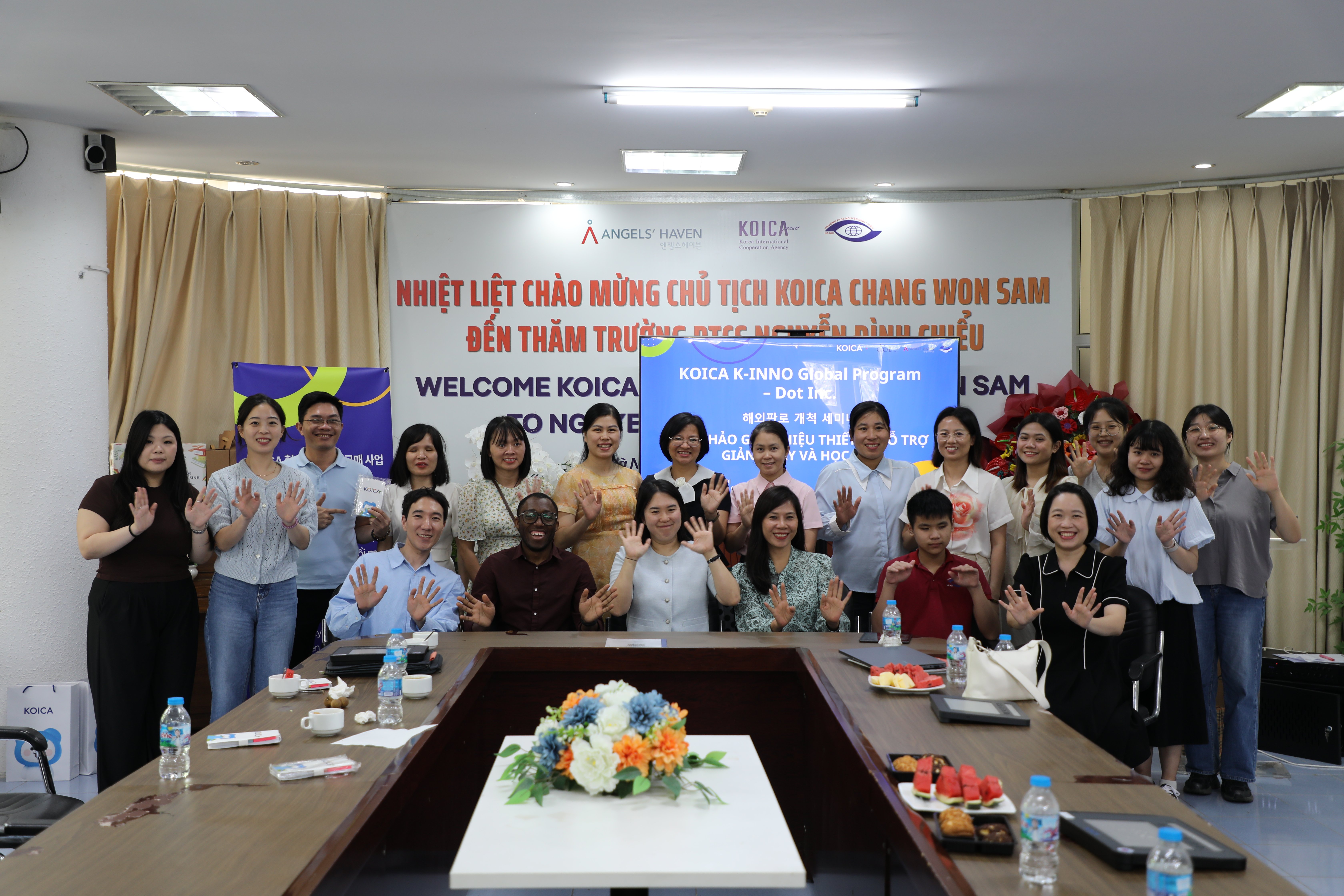
If Cambodia represents a mature partnership, Vietnam marks the start of a brand-new one. Four Dot Pad units and four iPads made their way to Nguyễn Đình Chiểu School in Hanoi, shipped securely via diplomatic pouch to get them into the classroom without delay, where our team worked alongside the KOICA Vietnam office to bring the technology to life for the first time.
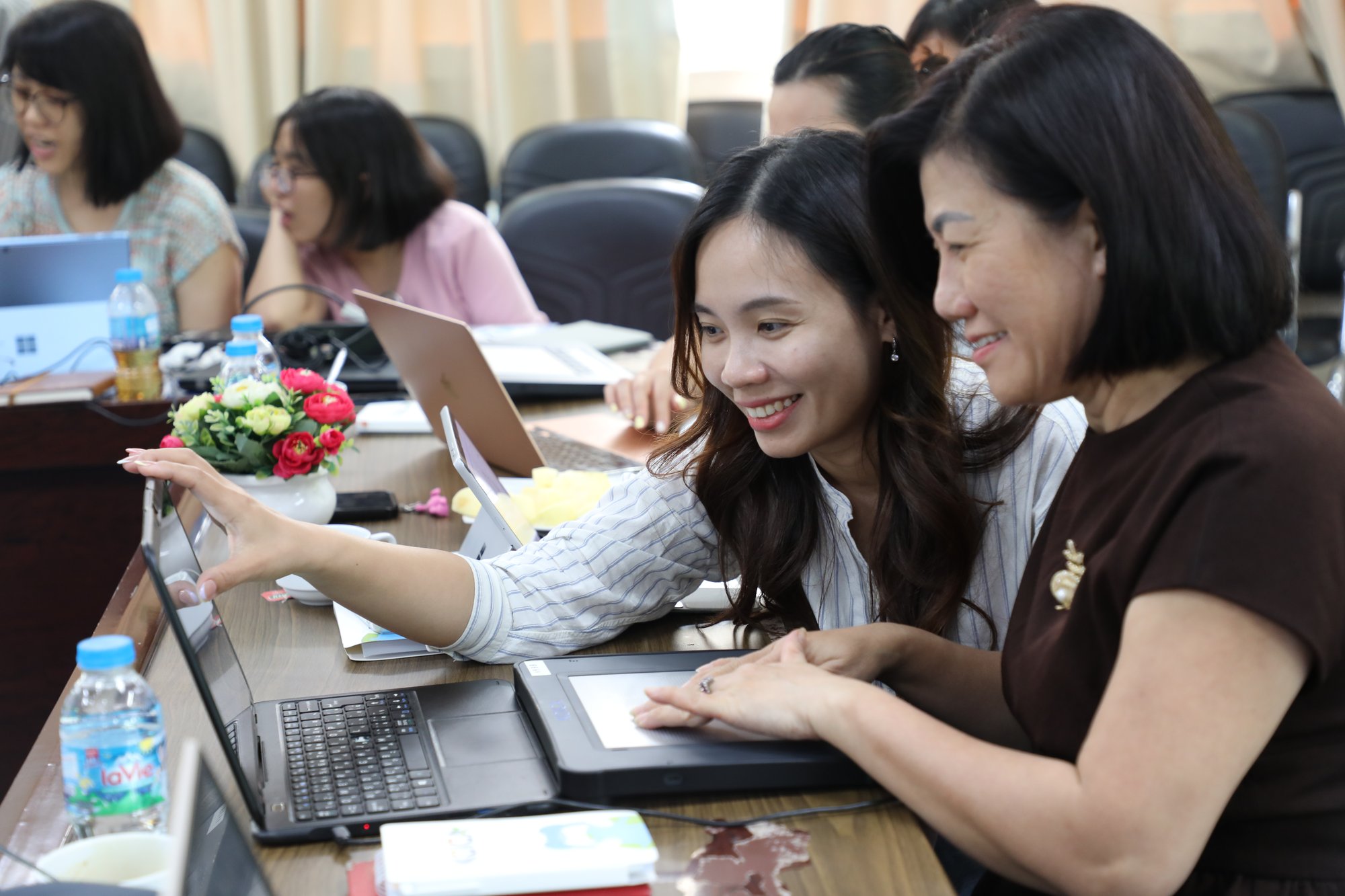
Over two days of onboarding, close to 20 special education teachers didn't just learn how the Dot Pad works, they built their own tactile learning materials in Dot Canvas, mapped directly to the Vietnamese curriculum. That distinction matters: these are teachers creating content for their own students, in their own classrooms, rather than relying on materials designed somewhere else and shipped in.
 Teacher feedback echoed the enthusiasm in the room: every one of the teachers surveyed rated the training content directly relevant to teaching visually impaired students a perfect 5 out of 5 and gave the overall onboarding experience an average of 4.78 out of 5. The most common note wasn't a complaint it was a hope, repeated again and again: that every visually impaired student in their classroom could eventually have their own Dot Pad, and that this is the start of an ongoing relationship rather than a one-time visit.
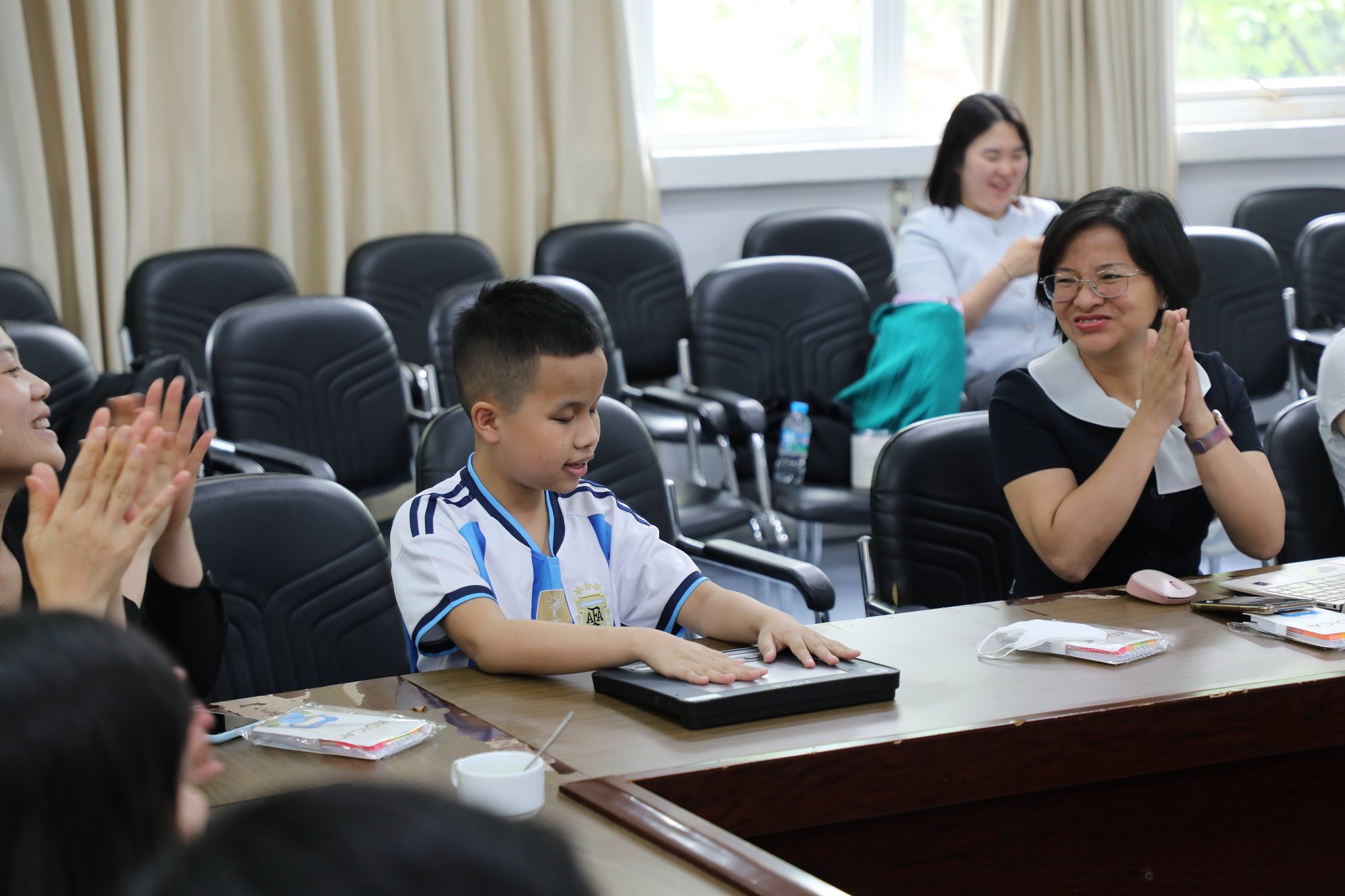
The trip closed with a moment that stayed with everyone in the room: a hands-on demonstration day for five blind and low-vision students and their families. For many of them, it was the first time feeling a map, a shape, or a diagram rendered in real-time tactile graphics, with parents and guardians standing right there to see it happen. It's one thing to talk about accessible education in the abstract; it's another to watch a child trace a shape with their fingers and have it click.
 What Ties Both Cities Together
Cambodia and Vietnam sit at very different points in their journey with Dot, one a two-year partnership maturing into steady daily use, the other a first chapter just beginning, but both point to the same underlying truth: real accessibility isn't something you ship in a box. It's something that grows through relationships, through local educators, and through technology that adapts to the community using it rather than the other way around.
Dot Canvas is what makes that possible in both places. It turns teachers, not engineers, not outside specialists, into the creators of their own accessible content. That's the difference between a one-time donation of hardware and a self-sustaining local ecosystem, and it's the part of this work we're most proud of.
Looking Ahead
None of this happens without partners who share the same conviction. Huge thanks to KOICA, Soonchunhyang University's project team, NISE, X-Vision Technology, and Nguyễn Đình Chiểu School for making this work possible. And a special shoutout to the teams on the ground: in Cambodia, training lead Lee Sang-hee, visual impairment specialists Kim Jeong-ho and Kim In-hee, special education specialist Oh Yu-jeong, and program coordinator Kang Hyo-jin; and in Vietnam, Rakhat Kobessov of our Global Customer Support team, alongside KOICA Vietnam Office's Kim Narae, Pham Thuy Duong, Sion Lee, and Noh Eun-song, who led installation, training, and local coordination in Hanoi, along with every teacher, student, and family who welcomed our team into their classrooms this July.
 Stories like these are also why we're proud to partner with the International Council for Education of People with Visual Impairment (ICEVI), an organization dedicated to spotlighting exactly this kind of work in low- and middle-income countries around the world. Cambodia and Vietnam are two classrooms in a much bigger picture, and we're glad to have partners who help that picture reach further.
This is just the beginning. More classrooms, more languages, more students getting to feel their world a little more clearly, one dot at a time. If you're an educator, a partner organization, or simply someone who believes accessible education shouldn't be optional, we'd love to hear from you.
Follow our journey and get in touch at dotincorp.com and stay tuned for more stories from the classrooms we're proud to call part of the Dot community.
.png?width=1920&height=1080&name=Copy%20of%20Green%20Orange%20Modern%20Bold%20Marketing%20Webinar%20Video%20(1).png)